Alleystroke: A Raw, Handcrafted Display Font for Makers
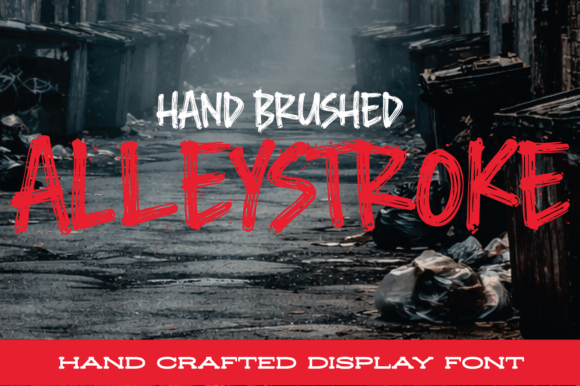
If you’ve ever held a brush pen in your hand and felt that electric rush when ink hits paper—imperfect, alive, full of motion—you’ll recognize Alleystroke immediately. This isn’t a sterile, over-polished script. It’s a display font built from the spirit of alleyway tags, quick coffee-stained sketches, and unfiltered creative energy. Its rough edges, subtle inconsistencies, and organic flow make it feel human—not generated, not generic, but genuinely handmade.
As someone who designs printable wall art, prints labels for small-batch candles, cuts vinyl for boutique gift tags, and crafts wedding welcome boards for local couples, I need fonts that do more than look pretty. They need to hold up on physical products—from ¼-inch sticker backing to 24-inch farmhouse signs—and still feel intentional, authentic, and commercially strong. Alleystroke delivers exactly that.
It shines brightest where personality matters most: product names on apothecary jars, “Hand Poured” on soy candle labels, “Welcome Home” on rustic wooden signs, or “Just Married” on foil-embossed wedding invitations. Because it’s a display font, it’s designed for impact at medium to large sizes—not body text—but its clarity and rhythm keep it highly readable even at 18–24pt on printed cards or die-cut stickers. I’ve used it successfully on matte-finish kraft tags (cut with my Silhouette Cameo), heat-transfer vinyl for linen tote bags, and SVG files for Cricut users—every time, customers comment on how “real” and “crafted” it feels.
For seasonal craft designs, Alleystroke adds instant warmth and character. Think “Cozy Season” on holiday mugs, “Farm Fresh” on farmers’ market produce bags, or “Summer Nights” on backyard party banners. Its natural flow avoids stiffness without sacrificing legibility—unlike some overly flourished scripts that blur when scaled down or cut at low resolution. On mockups, it reads cleanly across devices; in print, it holds texture beautifully, especially with letterpress or foil stamping.
Readability tips I’ve learned through trial: avoid using Alleystroke below 14pt for physical labels or small stickers—its expressive strokes need breathing room. For Cricut or Silhouette projects, always convert to outlines before cutting, and test a single letter first on your chosen material. With vinyl or cardstock, slight kerning adjustments often help tighten spacing for tighter layouts, like narrow jar labels or slim planner tabs.
Font pairing is where Alleystroke truly becomes a workhorse. Pair it with a clean, neutral sans serif—think Montserrat, Lato, or Inter—for balance: Alleystroke as the headline or brand name, the sans serif for ingredients, dates, or fine print. For wedding stationery or artisan packaging, try it with a gentle serif like Playfair Display or Cormorant Garamond—the contrast elevates both. And yes, it plays beautifully alongside other handwritten fonts or script fonts in layered digital printables, as long as you reserve Alleystroke for the boldest visual anchor.
The file package includes OTF and TTF formats—fully compatible with Canva, Adobe Creative Cloud, Silhouette Studio, and Cricut Design Space. There are stylistic alternates and ligatures baked in, so “The” or “And” can have subtle, natural joins instead of mechanical breaks. While it’s not a multilingual font with extended diacritics, it covers standard English, European Latin characters, and common punctuation—more than enough for most handmade labels, greeting cards, and digital downloads.
One thing I always double-check before launching any product: licensing. Alleystroke comes with a commercial license that covers physical goods (stickers, mugs, shirts, tags), digital templates, SVG bundles, printable collections, client design work, and even resale-ready Canva templates. That means if you’re an Etsy seller offering editable wedding invites or a small-batch soap maker printing custom labels, you’re covered—no extra fees, no attribution required. Just be sure to verify your license terms match your use case (e.g., embedding in apps or web fonts may require separate permissions).
I reach for Alleystroke when I want my product to say, “This was made with care—not outsourced, not templated, but thoughtfully crafted.” It strengthens brand consistency across packaging, social media graphics, and in-person signage because it carries a distinct voice that customers begin to recognize. A candle shop using Alleystroke across their jar labels, Instagram story highlights, and in-store chalkboard menu builds cohesion without repetition. A planner designer using it for section headers and motivational quotes creates emotional resonance—readers don’t just see words, they feel the intention behind them.
It’s also surprisingly versatile across niches. A children’s boutique uses it for “Tiny Hands, Big Dreams” on onesies. A coffee roaster applies it to “Small Batch Roasted” on grain-sack bags. A floral designer stamps “Wild & Gathered” on dried bouquet tags. In every case, Alleystroke adds authenticity without leaning into cliché—it’s bold but not loud, expressive but not chaotic, handmade but still professional.
At its core, Alleystroke is more than a premium font. It’s a design asset that supports your values as a maker: real materials, real process, real connection. When your customer picks up a product with Alleystroke on the label or invitation, they’re not just reading words—they’re sensing the energy behind them. That’s the quiet power of thoughtful typography. And for anyone building a handmade business where every detail counts, that kind of resonance isn’t optional. It’s essential.